Old Front Line
WW1 Podcast with Paul Reed
Questions and Answers Episode 49
In this Old Front Line Q&A episode, we tackle a fascinating range of questions from listeners about life, death, and survival on the battlefields of the First World War. We begin by exploring whether veterans of the conflict were ever allowed to be buried within the official war cemeteries alongside the comrades who fell during the war, and look at the rules established by the Commonwealth War Graves Commission after the creation of the Imperial War Graves system. Did any veterans later return to the battlefields to be laid to rest where they once fought?
We also examine the shadowy world of sniping on the Western Front. How common were snipers, how were they selected, and what training did they receive as the war progressed? We discuss the evolution of sniping from the early dominance of German marksmen to the later development of organised British sniping schools.
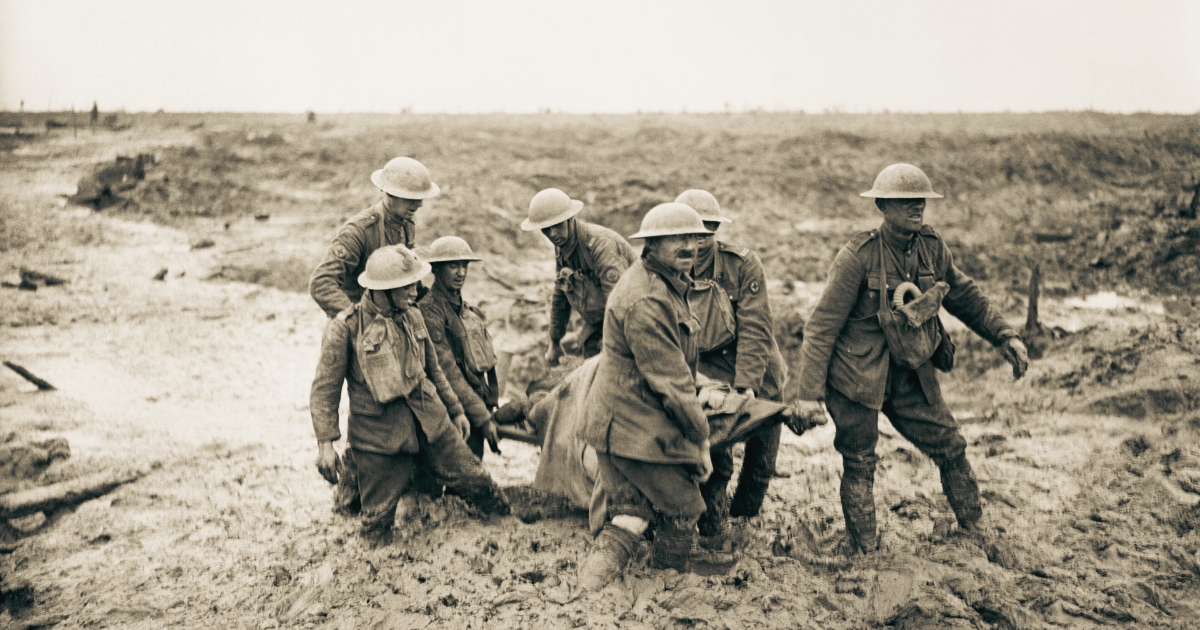
From there we move to the mud of the Ypres Salient during the Battle of Passchendaele in 1917, asking how stretcher bearers managed to rescue wounded men across the shattered and waterlogged battlefield.
Finally, we recommend some essential reading for anyone wanting to better understand the fighting around Ypres and the wider story of the Third Ypres offensive.
Main Image: Battle of Pilckem Ridge. Stretcher bearers struggle in mud up to their knees to carry a wounded man to safety near Boesinghe, 1 August 1917. (IWM Q5935)
Sign up for the free podcast newsletter here: Old Front Line Bulletin.
You can order Old Front Line Merch via The Old Front Line Shop.
Got a question about this episode or any others? Drop your question into the Old Front Line Discord Server or email the podcast.
3 Comments on “Questions and Answers Episode 49”
Leave a reply to oldfrontline Cancel reply


 Old Front Line
As usual great answers to interesting questions……I was in Oosterbeek Cemetery last week and 3 gardeners as you mentioned buried there one was 73 years old……
LikeLiked by 1 person
Thanks Niall, and most interesting.
LikeLike
Thanks for another excellent Q and A. The euphemistic way of describing the manner of a soldiers death reminded me of my great uncle who was killed aged 18 on the Somme in 1918 and buried at Mailley-Maillet. I have the local newspaper cutting reporting his death which started that he and a friend went into a dugout to sleep and overnight the dugout was hit by a German shell that killed them. Basically they went to sleep and didn’t wake up.
Regarding your response to question 4, get thee behind me Satan!
LikeLiked by 1 person