Old Front Line
WW1 Podcast with Paul Reed
Are We Forgetting The First World War?
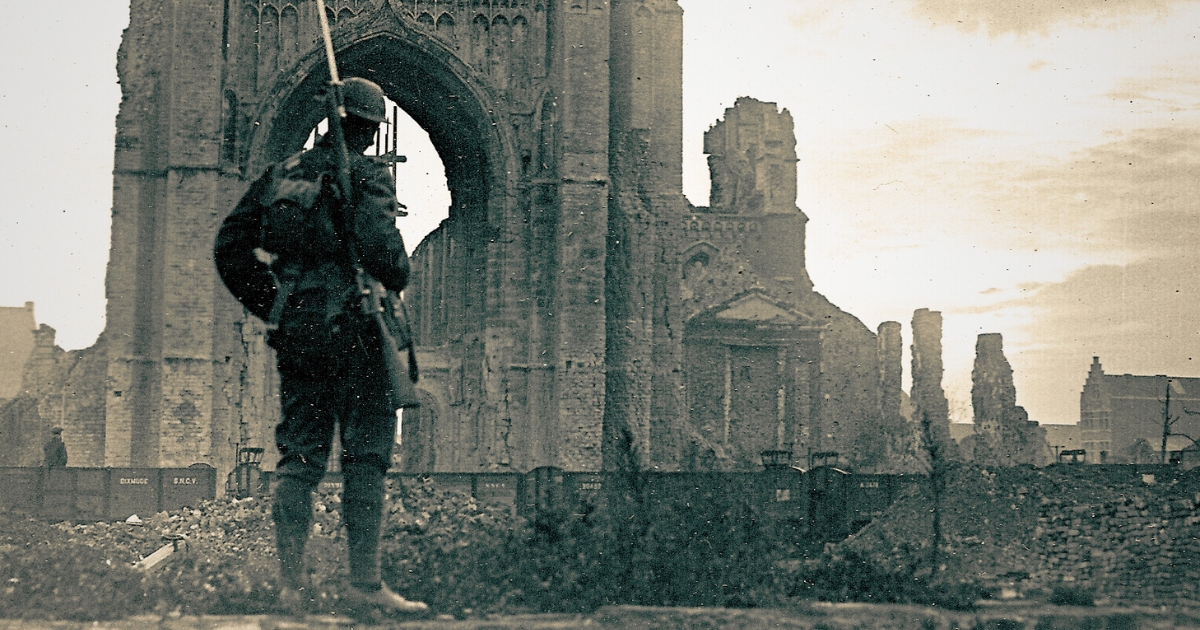
Is the First World War slowly fading from public memory, or has our relationship with the Great War simply changed? In this episode, Are We Forgetting The First World War?, we explore how interest in WW1 has grown, shifted, and adapted over the last forty years, and what the future may hold.
We begin in the 1980s, with the formation and growth of the Western Front Association, a turning point that helped revive serious public interest in the First World War. From there, we chart the expansion of family history research, as available records and personal archives encouraged millions to reconnect with relatives who served. We also reflect on the passing of the last surviving First World War veterans, a deeply symbolic moment that changed how the war is remembered and commemorated.
The episode then examines the rise of battlefield tourism, local history projects, and public engagement that laid the foundations for the First World War Centenary (2014–2018), a period of unprecedented books, documentaries, exhibitions, podcasts, and community remembrance.
But what happened after the centenary ended? We explore the unexpected “Covid bonus”, when lockdowns sparked a surge in WW1 podcasts, YouTube channels, online talks, and digital history projects, bringing the Great War to new audiences in new ways.
Finally, we ask where we are today. Is interest in the First World War declining, fragmenting, or evolving? And crucially, what can historians, educators, content creators, and enthusiasts do to ensure the First World War is not forgotten?
Sign up for the free podcast newsletter here: Old Front Line Bulletin.
You can order Old Front Line Merch via The Old Front Line Shop.
Got a question about this episode or any others? Drop your question into the Old Front Line Discord Server or email the podcast.
12 Comments on “Are We Forgetting The First World War?”
Leave a comment


 Old Front Line
I haven’t listened to the Podcast just yet. I’m saving it up for later. The question is compelling. I’d like to think that interest is strong, however, largely with older people (45+). The WFA is very active in my area (Suffolk) and the meetings are extremely well attended – not least the bar is terrific at the RBL and there’s good packed dinner box and a really good raffle. Speakers are always excellent. The challenge is how to bring the younger generations on board. I know that WW1 is part of the curriculum (my daughter was quizzing me about the history of WW1 for her homework) and my three kids have been on school trips to Ypres. My son, now 26, and I have walked the Somme (using Paul’s terrific guide book) and Verdun. We’re doing the Meuse Argonne this year. ‘Warhorse’ brought lots of younger people to WW1 and popular culture includes films (e.g. 1917 – like it or hate it). Poppy Day appears to be as strong as ever, too. To captivate younger generations, I think the human interest element prevails. Battle strategy, etc, might be too dry. Walking past the WW1 Memorial to the fallen in our town could become more than a memorial. Each name has a story to be told and they would all be relevant, as they are local – maybe with relatives still living in the area. Maybe some initiative to create real people and tell their story out of their name chiselled in stone would stimulate interest across all generations. Schools could adopt one of the Fallen for their curriculum on WW1.
LikeLiked by 1 person
Thanks, Alistair- all great suggestions. Let me know what you think when you’ve listened! Glad to hear your WFA branch is doing well, my fear is the general membership is now quite old and that needs to change going forward, I think.
LikeLike
As we reflect on the First World War, it’s important to remember not only those who served on the front lines but also the incredible contributions made at home. This year marks the 125th anniversary of the Girls’ Section of the Church Lads’ and Church Girls’ Brigade (CLCGB). During the Great War, they served under the name of the Church Nursing and Amb, ulance Brigade (RNAB), providing vital support in nursing and ambulance work (and bands for recruitment and moral purposes)in the UK including a nursing home on Pontypridd. Their dedication and service remind us that the war effort extended far beyond the trenches, and their legacy continues to inspire today. In May this year we will be holding a celebration of a 125 of service at Reywell Park near Hull/ part of the weekend activities will be a reenactment of nursing during the war years to pass on the knowledge and the legacy to todays young members.
As an organisation we also travelled to France with over 100 young members in 2016 to commemorate the 16th KRRC (CLB) battalion at High Wood (London Cemetery) as well as memorial services at Beaumont – Hamel, the Menin Gate and Thiepval (still available on YouTube – Live from Thiepval – Highwood 2006- The Church Lads & Church Girls Brigade Girls Drumhead Service}.
So yes, it is hard to keep the interest but, it can be done.
LikeLiked by 1 person
Menin
LikeLike
There’s little doubt that the number of tours heading to The Salient and the Somme have returned to pre centenary levels, on my last few tours in ’25 I had places like Essex Farm to myself, where in the past often 4 or more coaches were there at the same time. For school groups actually visiting the battlefields is both a valuable experience and at at times a stimulus for students to further research the Great War, especially those who admit to having had little interest prior to their tour. My great worry here though is that post Covid & Brexit, costs are becoming difficult for many schools, especially if travelling from the North of England or Scotland. I can however offer no solutions there.
I’m certain that school tours are very important in getting a younger generation involved in groups like the WFA, Great War Group and so on, it’s very heartening to me to see under 20’s attending talks at my local WFA, the quality of speakers and the range of subjects helps greatly.
As you say Podcasts, Youtube and other internet media, have had a great impact over the last few years, I know that the Old Front Line and others certainly kept myself and many of my colleagues motivated through those (what felt like) long no tours Covid years, I’m certain that internet based sites and Podcasts, Blogs Vlogs etc will become even more important, with the caveat that AI needs to be monitored carefully as some of the AI content at present is, to say the least, dubious.
LikeLiked by 1 person
Thanks again Paul for your interesting observations and comments and I always enjoy your references to Colchester where I live. I’m in two minds about if interest is waning because on the one hand after the centenary covid came and put an end to travel for 2 years then the Menin gate was effectively closed this had the effect of changes in Ypres so when visitors like me returned we found that some establishments had closed and remaining restaurants did not cater for the British in their menus in quite the same way as pre covid. I visit Ypres and the Somme area 3 or 4 times a year and I find the Last post at the Menin gate is always well attended and school parties are often to be seen at the popular sites around Ypres and the Somme. I notice that most visitors on the various cemeteries and places of interest are of the older generation but that maybe explained because like me when they previously led busy lives they were lucky if they could fit just one visit in over a few years like my first one with Leger in 2000 but as people retire or children move on they have more time to drop back on their interests, I would hope that some of the thousands of schoolchildren who visit May one day return.
LikeLiked by 2 people
Good day to you Paul Happy New Year
I’ve got a question I’ve been toying with for a while now Wonder if you can shed light on it. The question is Who decided what to call a battle did the soldier know what battle he was in and who decided the end date and did the soldier no that one ended another one start because it was almost none stop for four years? Ps I feel like this question is like Baldrick’s on how the war started. If so I apologise I’m laughing myself. Thanks Simon Keep up the fantastic work.
LikeLiked by 1 person
It’s a great question which I will add to the QnAs!
LikeLike
A very good question Paul!
From my personal point of view as a Voluntary Ceremonial Assistant for the Last Post Association, we keep remembering every day at the Menin Gate during the Last Post Ceremony.
Where we see that what we do as ceremonial assistants is no longer “just” showing people where to stand and not to stand
No, we now go in dialogue with the visitors and guiding/helping them before and after the ceremony. Whats is the story behind it, who’s where, who’s not…..
On the other side, I try to keep the remembrance alive by creating Lego Builds for the younger generations (and also for the old ones you know ;-) )
The feedback that I get from the Lego builds like Vimy, Hedge Row Trench, NZ Memorial…. is so great. It makes it easier to talk and explain it to the next generations. I hope I continue doing this for quit a while. This year there will be added a new creation to this.
Wish you all the best, and thanks for your podcasts Paul.
Until we meet again at the Menin Gate.
Youri
LikeLiked by 1 person
Yes mate, you’re doing fantastic work there at the Menin Gate and with your Lego creations, absolutely amazing!
LikeLike
Thanks for this Paul. I was sorry to hear that there had been a drift in interest since the centenary, although I can’t say that I’m surprised. Most people that I know only have a passing interest at best. Its one reason why I like the Leger tours so much, the company of like minded people. I was pleasantly surprised though to hear that some younger people are taking an interest.
Is your Channel 4 documentary viewable anywhere?
LikeLiked by 1 person
Thanks, unfortunately it’s not available currently. Sometimes it pops up on More 4.
LikeLiked by 1 person