Old Front Line
WW1 Podcast with Paul Reed
Questions and Answers Episode 37
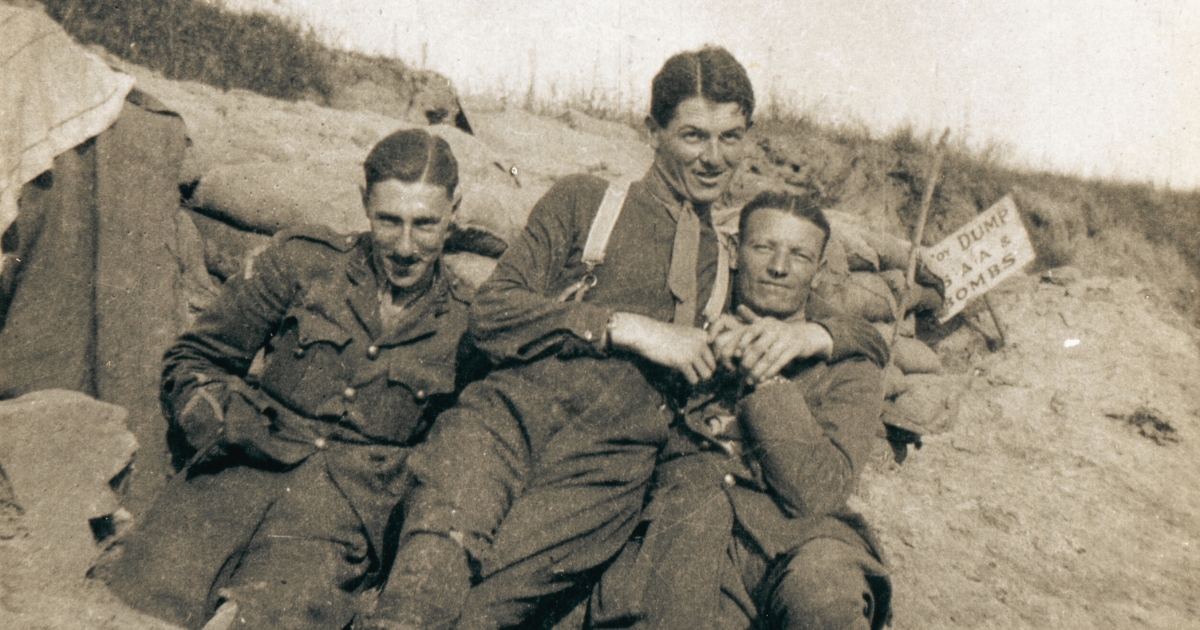
In this WW1 Q&A episode, we explore the lives and social backgrounds of British Army officers, ask whether First World War veterans hated their German enemies, and share the remarkable stories of soldiers who were discharged but re-enlisted to fight again. We also look at how people living on the Western Front battlefields today connect with the war, and whether interest in the Great War is fading—or still as strong as ever.
Sign up for the free podcast newsletter here: Old Front Line Bulletin.
You can order Old Front Line Merch via The Old Front Line Shop.
Got a question about this episode or any others? Drop your question into the Old Front Line Discord Server or email the podcast.
7 Comments on “Questions and Answers Episode 37”
Leave a comment


 Old Front Line
Thank you for keeping the memory of the men alive. I’m addicted to the podcasts.
I hope I’m not intruding, but I wonder if you could help me? I’m 74 years old, and so my research skills are limited by my ignorance.
My great uncle received the MM at either Ypres or the Somme – I’m not too sure. I would like to find out why he received this bravery award. He died in 1971 (he lived in our house), and generally refused to talk about the war. His name was Sergeant William Baxter (from Belfast and initially joined the North Irish Horse before transferring to the Royal Irish Rifles). I also know he was wounded (twice, I believe). BTW, his parents were (mis)informed that he was KIA.
Thank you very much John Lowry.
LikeLiked by 1 person
Hi John – I’ll reply to your email.
LikeLike
Hey all.
Regarding the question about the view of belgian people to the great war, I remember that 30 years ago, we didn’t get the story of the involvement of the Commonwealth and the battles they fought on our ground. The story of ww1 was that of the poor flemish soldiers being given orders in french by arrogant wallons. So it became a story of flemish emancipation.
You were right about the respect of the locals for the Commonwealth commemeration, perfectly shown by the Ieper fire department with the Last Post. There is nothing for the belgian soldiers as such. There is however the annual Ijzerwake, with again that focus on the flemish independance movement. You find there extreme right speakers, not focussing on the war itself, but on the flemish independance.
The issue of the flemish soldiers in ww1, became one of the reasons this movement was open to collaboration with the germans in ww2, hoping to become independance or autonomy. A lot of them fought in flemish brigade, as fe the SS-sturmbrigade Langemarck, on the East front in ww2. And it remains something the flemish movement don’t want to be remembered on.
That’s my experience of the view on ww1.
With the centenury however, there was more attention in Belgium for Ieper, its battles and the soldiers who fought there. So there was a shift through the last decades.
LikeLiked by 1 person
Fascinating insights, thank you!
LikeLike
Thanks again Paul, it’s heartening to learn that the French commemorate the two world wars and yes there is an element of tourism in and around Ypres but I agree that it’s not just that as there seems be a genuine appreciation of visitors in Ypres.
your mention of Zillibeke churchyard took my mind immediately back to standing and wondering as I look at those graves of the ‘privileged toffs’ who through timing and money were able to be buried there but lost their lives all the same.
Peter
LikeLiked by 1 person
Thanks. The burial of those men at Zillebeke doesn’t really relate to money, more circumstance and the approach to the burial of the dead in 1914.
LikeLike
Another great Q& A podcast Paul. I have a few relatives that re-enlisted after being discharged. My Great Grandfather was discharged from the Labour Corps in September 1918 after suffering an injury. He then re-enlisted in June 1919 and served for another year in France with another Labour Corps unit.
A Great Grand Uncle was discharged from the Royal Berkshire Regiment in March 1917 due to wounds received, and re-enlisted in the RAF in May 1918 serving for around 18 months.
Another relative, a (Regular) Corporal in the South Lancs Regiment, accidently overstayed his leave in October 1914, and rather than face the music, re-enlisted under a pseudonym into the King’s Liverpool Regiment, where he served for the remainder of the war. He requested afterwards that his medals be re-issued under his real name.
Just when you think you’re out… they pull you back in again!
LikeLiked by 1 person